Complimentary shipping above ₹2,999 · Each piece handcrafted with intention

The Story of Maithilii

From the Soil of Mithila

"Where women paint gods on mud walls and goddesses wear flowers in their hair — that is where Maithilii was born."

Madhubani, Bihar

Born from the Language of Mithila

Maithilii began with a question: what does it mean to wear your heritage? In the villages of Mithila — the ancient kingdom that straddles modern Bihar and Nepal — women have painted sacred images on the walls of their homes for thousands of years.

These are not decorations. They are prayers, stories, invocations. The lotus that blooms from mud. The fish that carries the world on its back. The wedding pavilion where Sita and Ram were joined. Each image holds a universe of meaning passed from grandmother to granddaughter, one careful brushstroke at a time.

"We did not create a brand. We created a conversation between the past and the present."
"Every thread carries the memory of Mithila — its soil, its songs, its women who painted the divine onto mud walls."
— Founder, Maithilii
Sita Vivah Scene

Inspired by Sita Maa

Maithilii is, at its heart, a homage to Sita Maa — daughter of the earth, queen of Mithila, embodiment of grace, resilience, and devotion. The Janaki — the daughter of Janak — who was born not from the womb of a woman but from the furrowed earth itself.

In Mithila art, Sita is never portrayed as passive. She stands tall in the centre of the Kohabar — the wedding chamber — surrounded by fish and lotus and the sun and moon. She is the axis around which the universe turns.

Our five collections are named for her five virtues: Janaki (grace), Vaidehi (devotion), Bhoomija (earth-abundance), Dhairya (resilience), and Karuna (compassion).

The Five Virtues of Sita Maa

Our Collections

Each Maithilii collection embodies one facet of the divine feminine spirit.

I
Janaki
Grace

The quiet composure of a woman who carries divinity in the everyday. Tussar silks and delicate Mithila work.

II
Vaidehi
Devotion

The unwavering faith in something sacred. Hand-painted cotton and chiffon with devotional motifs.

III
Bhoomija
Earth · Abundance

Daughter of the earth, rooted and flourishing. Chanderi silks with nature-inspired Madhubani work.

IV
Dhairya
Resilience

The strength to endure and transform. Bold Shibori-dyed sarees with Madhubani overlays.

V
Karuna
Compassion

The open heart that shelters all. Kalamkari dupattas and Cotton sarees in natural, gentle colours.

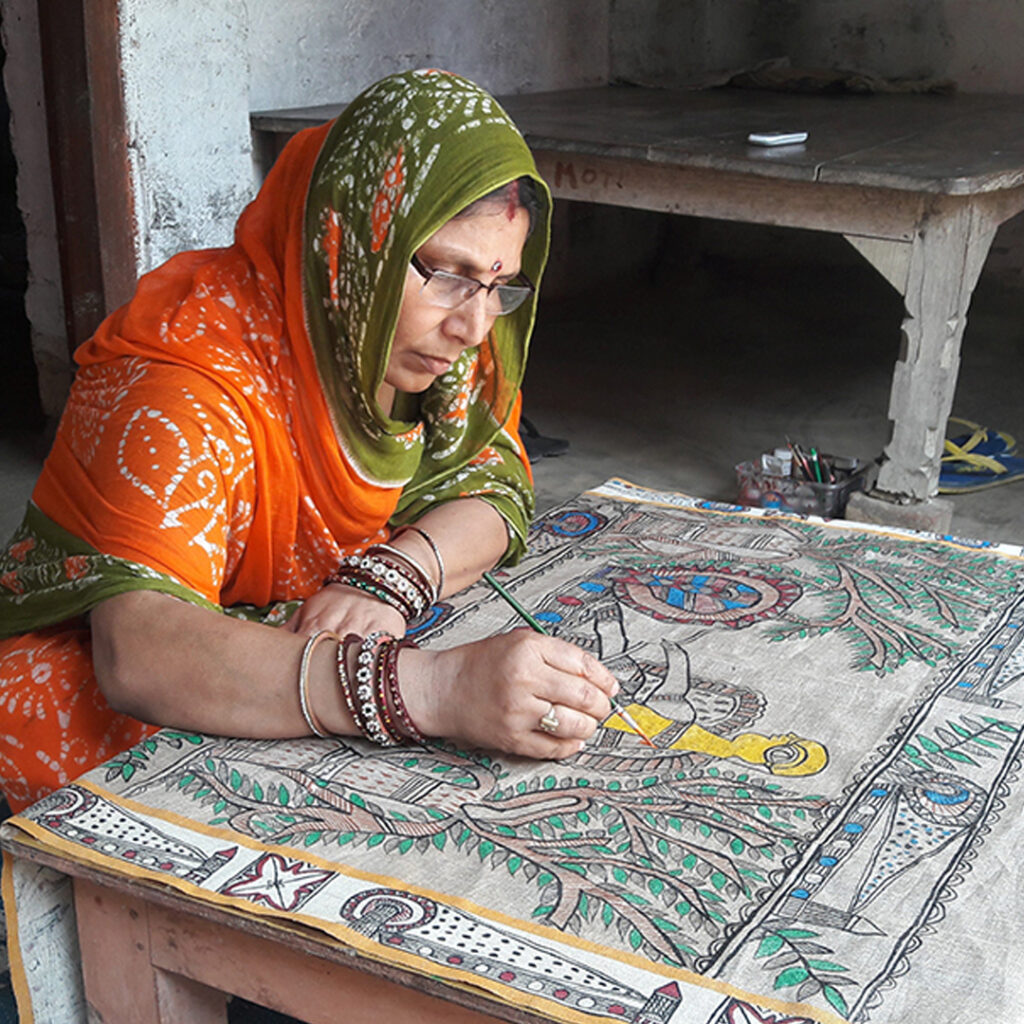
Master Artisans at Work

How Madhubani Comes to Life

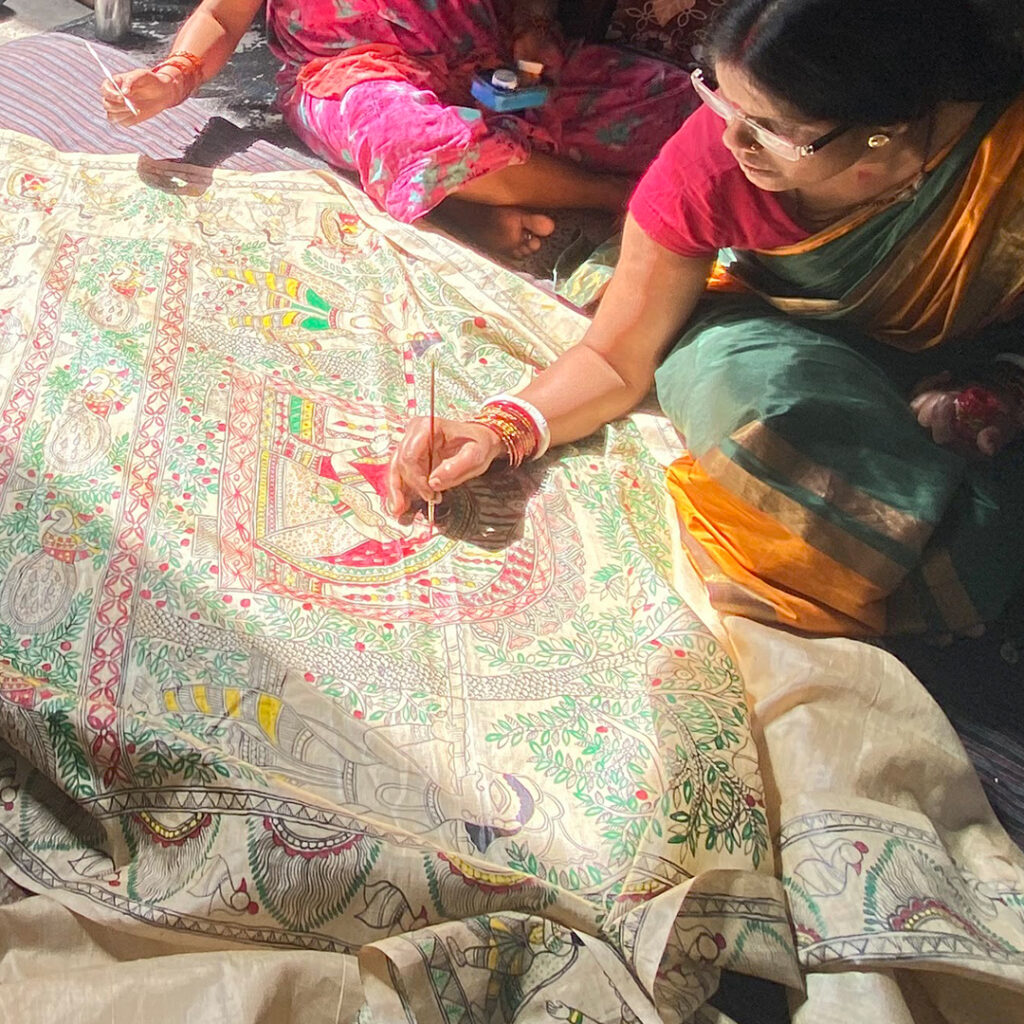
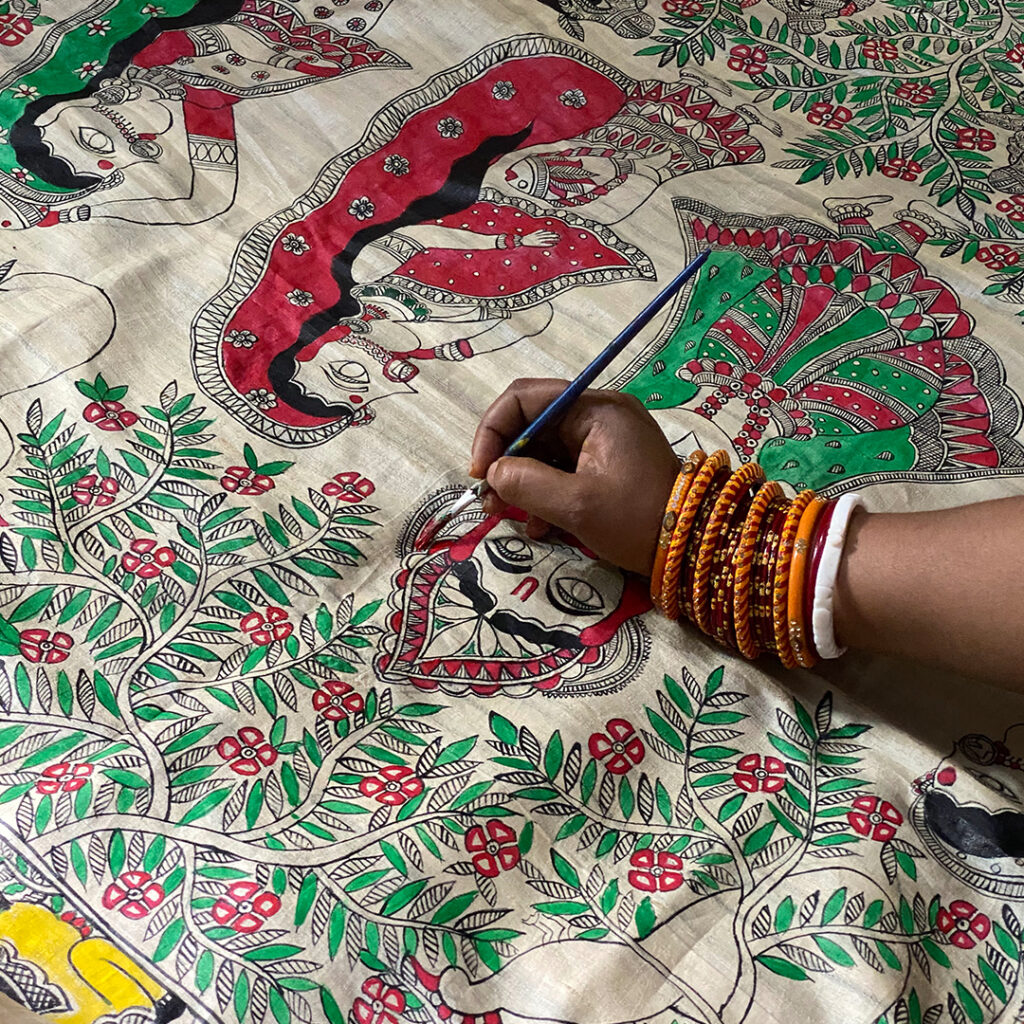
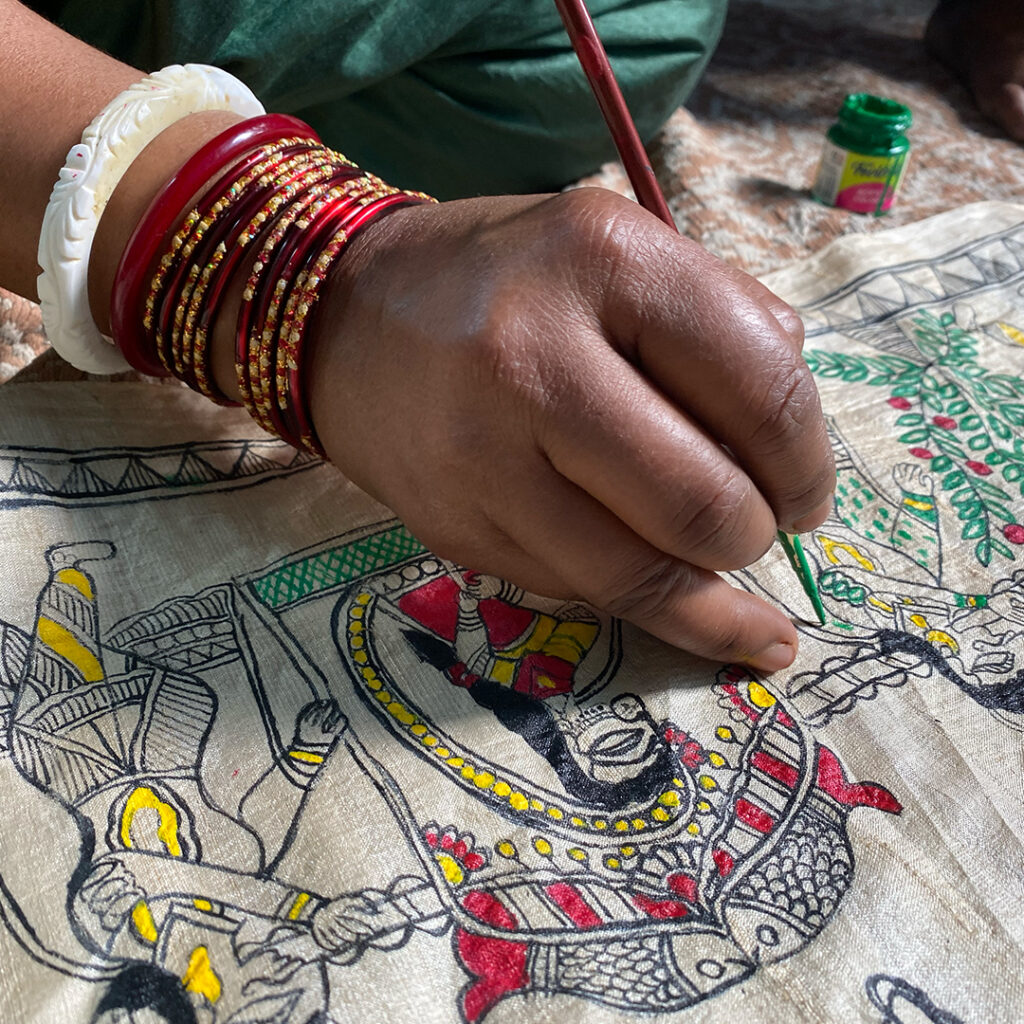
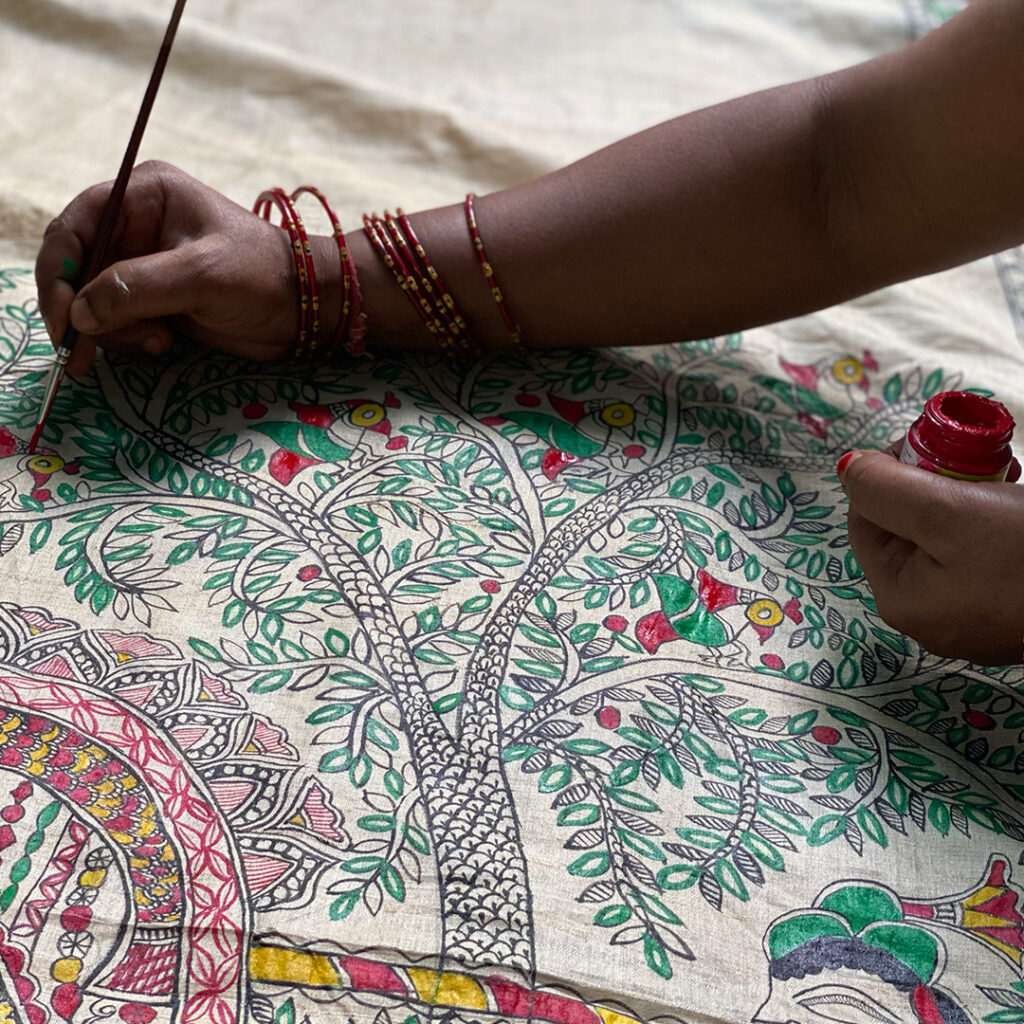
Madhubani painting — also called Mithila painting — is one of India's oldest living art traditions. Traditionally done by women on freshly plastered mud walls and floors, it has been practiced for at least 2,500 years in the Mithila region.

Each piece begins with the fabric. For Tussar silk sarees, we work with master weavers in Bhagalpur, Bihar — the "Silk City" — who produce the characteristic coarse, golden silk from local silkworms. For Chanderi, we source from the hand-loom weavers of Madhya Pradesh.

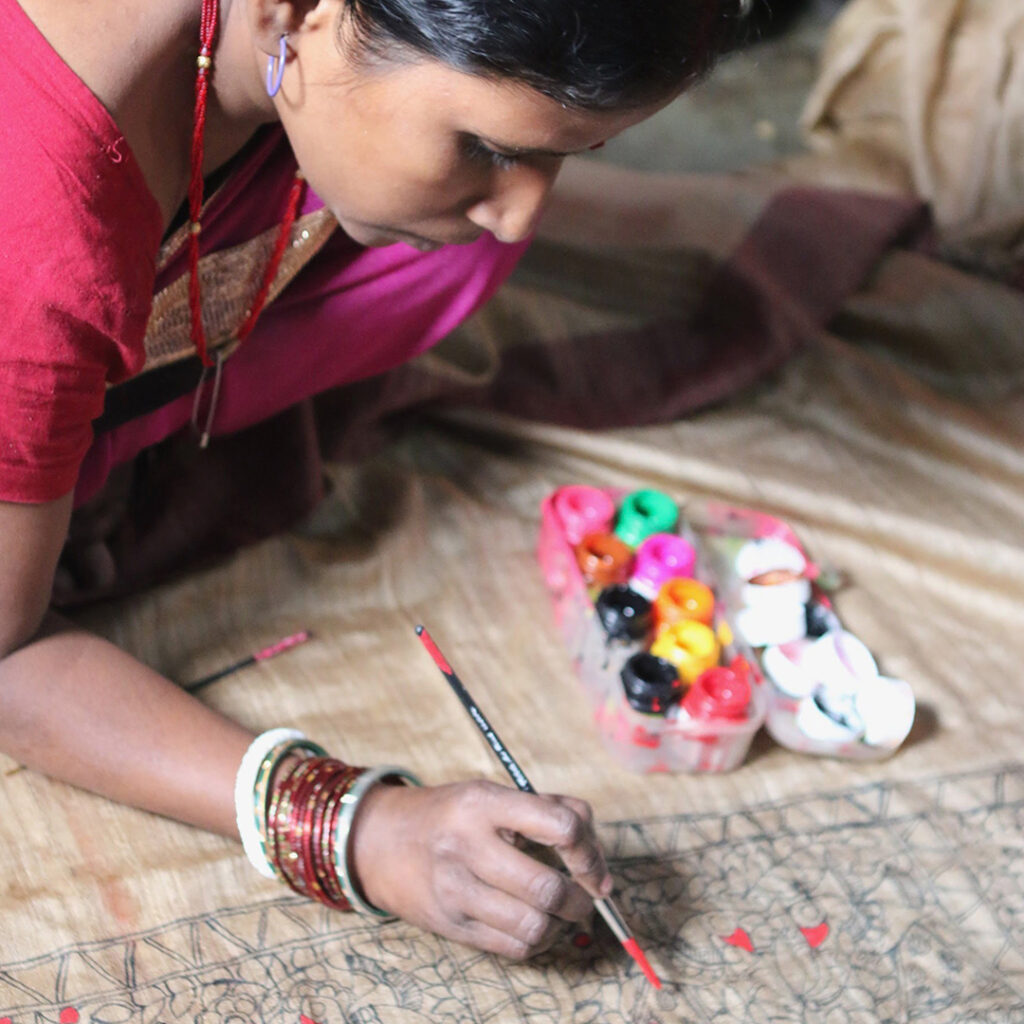
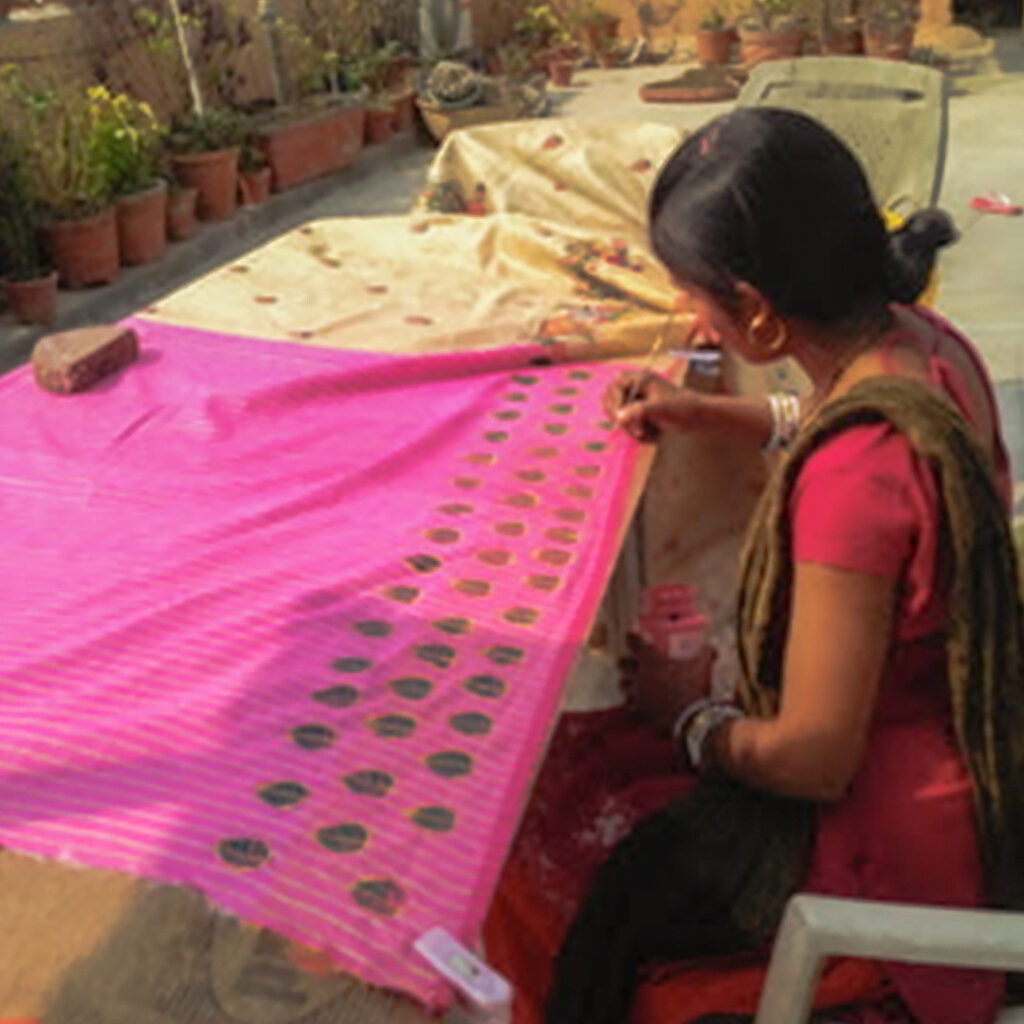
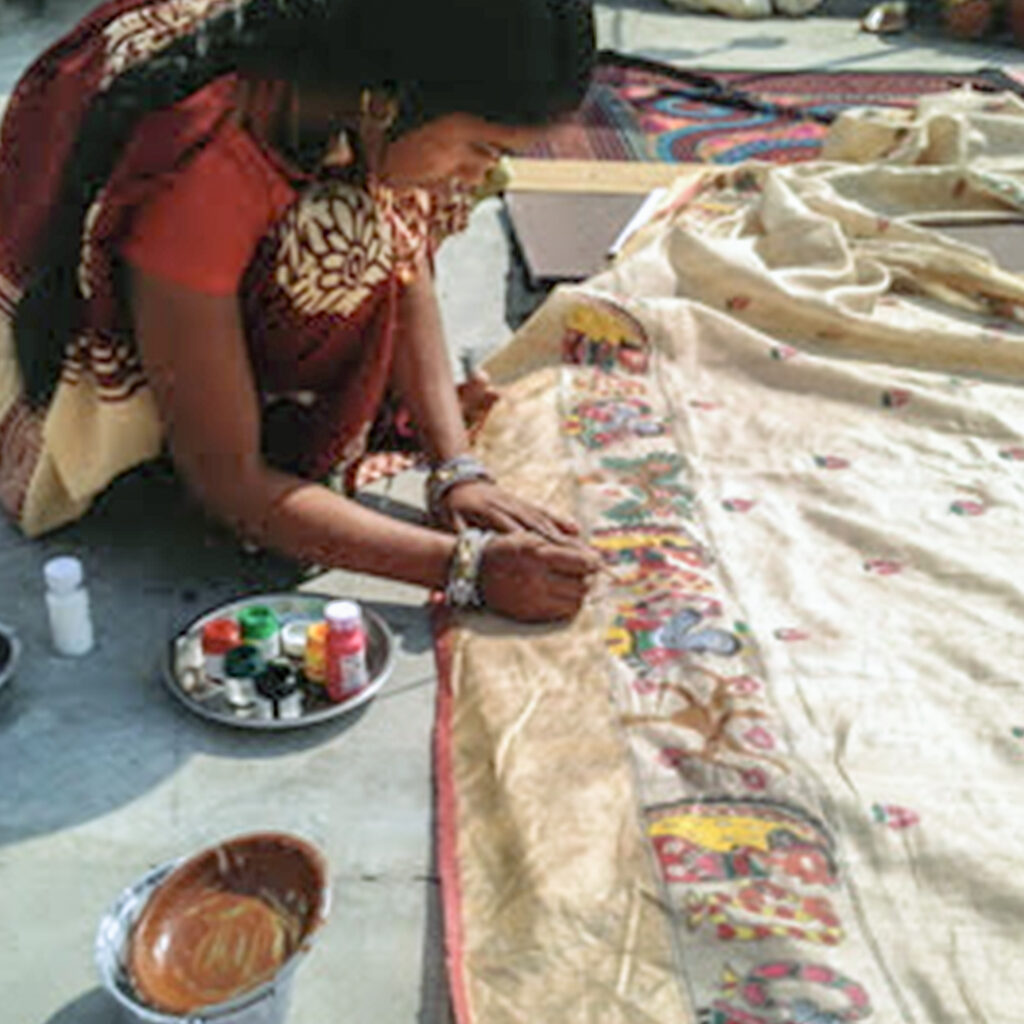
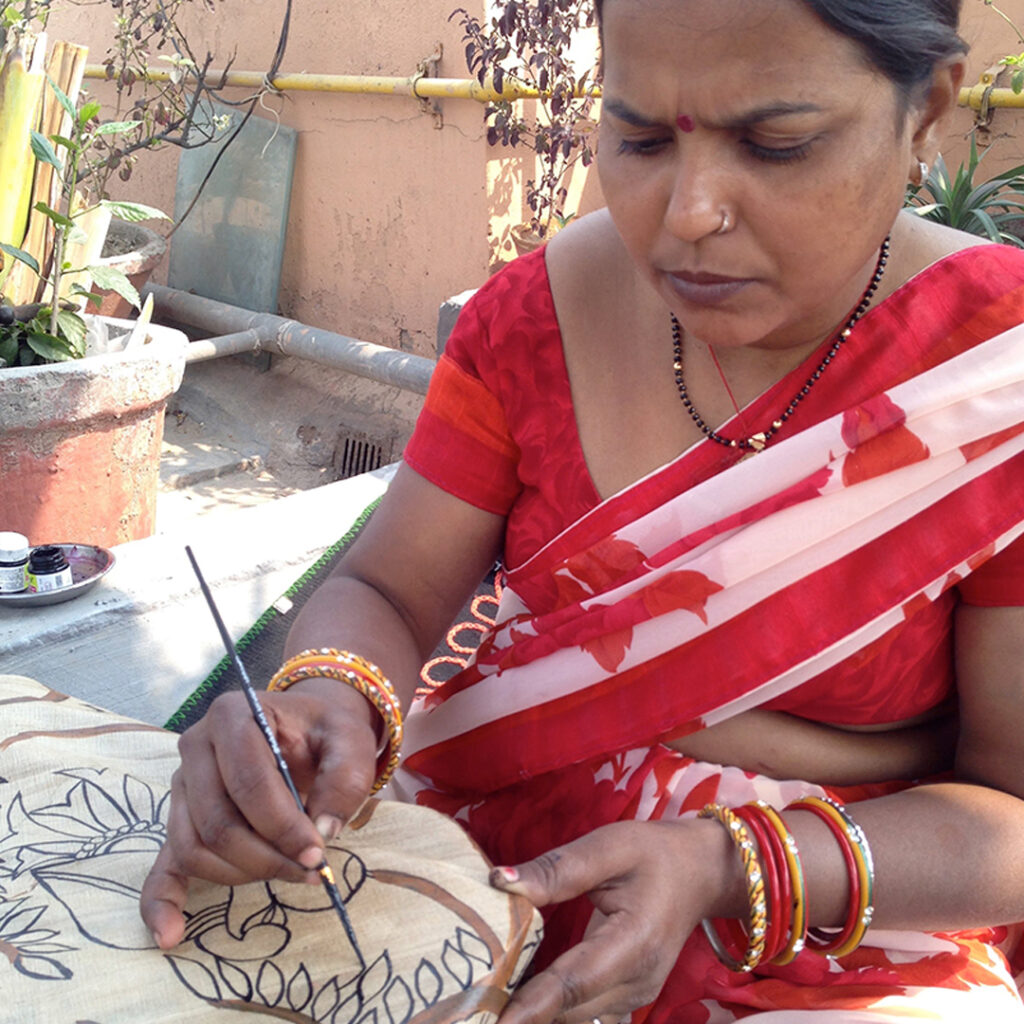
The Madhubani painting is then done by hand by artisan women in Madhubani district, using natural pigments made from plant extracts, minerals, and traditional preparations. No two pieces are identical. The slight irregularities, the slight variations in the brushstrokes — these are not flaws. They are the signature of a human hand.
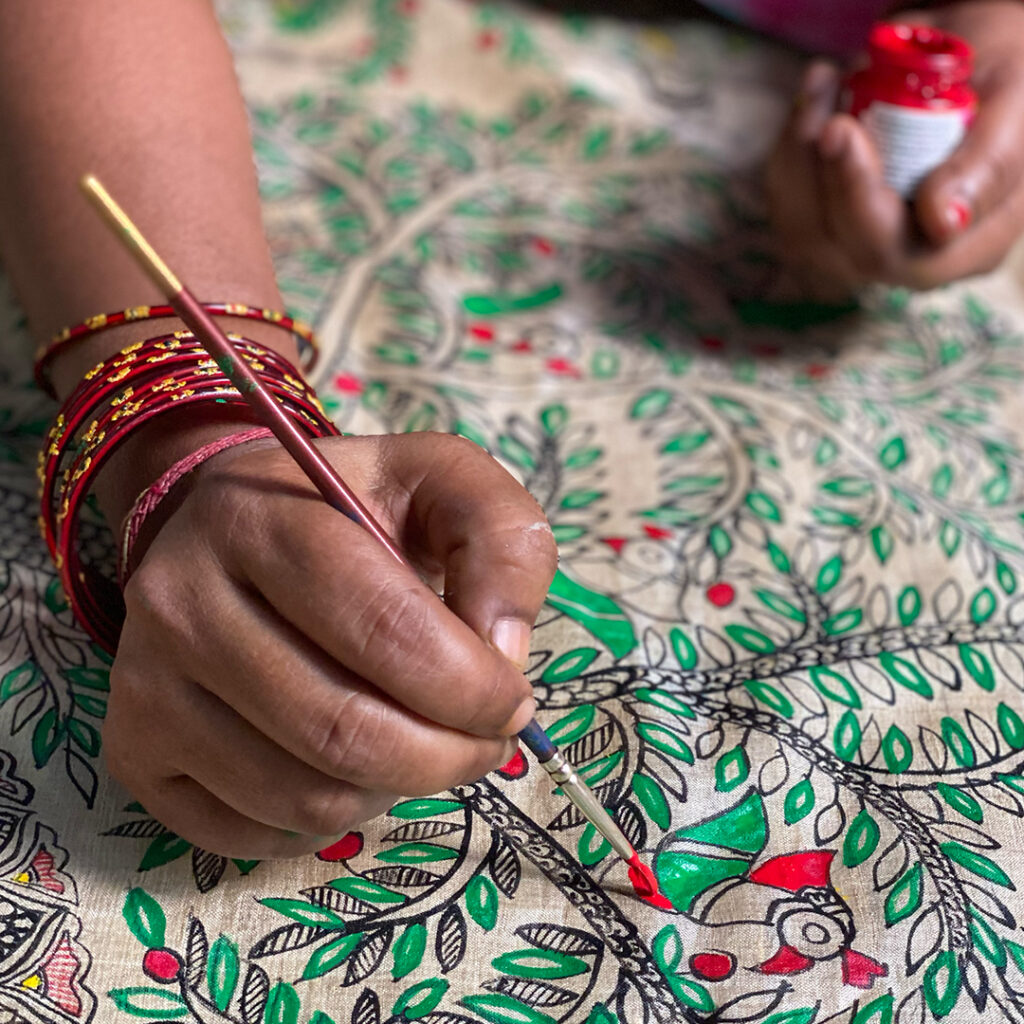
The Hands Behind the Art

Our Artisans

Maithilii works with a network of artisan women in Bihar and Madhya Pradesh whose skill carries forward generations of living tradition.

S

Savitri Devi

Madhubani Painting · 25 years

Savitri learned to paint at age 8 from her grandmother. Her speciality is the Kohbar — the wedding chamber — rendered in rich ochre and deep red on tussar silk.

P

Pushpa Kumari

Kalamkari · 18 years

From Andhra Pradesh's rich Kalamkari tradition, Pushpa hand-draws mythological scenes and nature motifs using the kalam — the bamboo pen — with natural dyes.

R

Radha Bai

Shibori & Madhubani Fusion · 12 years

Radha pioneered a beautiful fusion — resist-dyeing the silk with Shibori techniques from Japan before hand-painting Madhubani motifs over the dyed ground.

Wear the Art. Carry the Story.

Each Maithilii piece is a bridge between you and the women who painted prayers on mud walls. Explore our collections.

Shop Now Get in Touch